Its really sucks when any web site doesn't support your favourite browser.Yes I love Netscape and unfortunately found most of the Pakistani's site running without its support or they just become spaghetti when opted to browse with NS ;Pathetic! no?
Anyway just have some weary clicks on PEC & taste its spaghetti-ness with NS; its scrumptious ...:)try it
And yeah PEC's site asking something with a tone of lion-roar; yes here it is:
Message from PEC to all of its valued members ...
"All Engineers registered with PEC as Professional Engineers are advised to use the word "Engineer" or "Engr" as a prefix to their names."
okay, me obedient..
Engr.Aay Dee ;)
Besides ironies, this updated version of PEC's site is a bit better than prevoius one, but with IE.
Friday, January 28, 2005

Wednesday, January 26, 2005
open source
If you dont have any specific definition of Open Source then check this Definition. Also get your self update with OS News.
Tuesday, January 25, 2005
Saturday, January 15, 2005
we are changing..
we are trying to put some techno-flavour in this blog.Very soon you will find a different world here:).inshAllah
Wednesday, January 12, 2005
An answer of question "What you think of Islam as most terrorists are muslims" on bbc
Assalaam-O-Alaikum,
Guten Morgan ( Good Morning )
Well, did I mentioned I am learning German now-a-days. Well, I guess now I don't have to explain that why I am off the picture now-a-days.
I have answered so many times on BBC about there stupid questions but they never publish my answers. Khair, I thought why not to publish over here, so, here it is:
Well, Islam is a great religion. The problem is who is setting the standard for terrorism? Anybody who asks about his right to servive and if not acknolwdged tries to get that right is labeled as terrorist. Everybody is using this word to get hold of the resources of the world. By the way I am not amused by it as it is the part of signs of Qiyamat( Dooms day)
Allah-Hafiz.
Thursday, December 16, 2004
yellow!!!!!!! its 9:30 pm n this is Aay Dee reporting from his world...hey there!
i m out..yes, out to write a long long post here...my life isn't particularly exciting... or maybe it's so excting and secret and underground that I can't post it all here ..:-) khair..i plan to up this blog again...till i back on track..tata;
i m out..yes, out to write a long long post here...my life isn't particularly exciting... or maybe it's so excting and secret and underground that I can't post it all here ..:-) khair..i plan to up this blog again...till i back on track..tata;
Monday, November 29, 2004
Tips for a Successful IT Career : by Tee Emm
Information Technology has taken our lives by storm. No matter who you are,you are bound to be affected by the advent of Information Technology. If technologies are about changing human life and improving its quality, noother technology does a better justice to this notion than IT.
We acknowledge the fact that Information Technology has, and will have, a driving - force impact on our lives. By the same token, Information Technology education and training is essential in today's environment.
We will talk about a few tips that can be consumed by young fellows who are either into IT Education or are entering into a professional IT Career. All this also applies equally well for people who are following some other profession 'applying' the Information Technology to their respective professional fields.
Tip 1: Identify yourself.
First off, identify yourself. Ask yourself if you would want to be an IT-Enabled Professional or a pure IT Professional? While apparently simple, this could be a tricky question. You could either be a 'Database Administrator' or a 'Finance Executive who does his Databases on his own'. You could be a 'CAD/CAM Guru' or a 'Mechanical Engineer who does everything on his machine'.
Once you answer this question, you are done with finding the right balance to strike between the endeavors in your professional career (or education) and your IT career (or education). The earlier you identify yourself, the less time you are likely to waste in a wrong direction.
Tip 2: Identify Your Key Technology Area. Information Technology is sort of a Swiss knife with all sorts of stuff bundled under the same label. There is a multitude of areas that can be classified under the IT umbrella and they are as diversified as they could possibly be. (Consider the divide between Computer Graphic Designing and Database Development - all being popularly
bundled under the two-letter magic word! )
One of the most important things you need to decide right in the beginning is the Key Technology Area you would be following in the rest of your foreseeable future. Of course, being dynamic in terms of goals and ambitions is good but there is a lot of difference between being dynamic and being undecided. If you are just getting into IT education, it's okay to take a diet that is a mix of a handful of technologies. But otherwise, you need to decide your key technology area. Nothing is more painful than to see someone into an IT career for tens of months being still undecided on this essential issue.
Tip 3: Don't Forget the Basics:
Whether you are into IT education or pursuing a professional career related to Information Technology, it is of utmost importance that you keep the 'basic rules and principles' of your technology in front of you all the time. Once you know what key technical area you belong to, identify basic rules and principles of that area. You would learn a few from the text books, a few from gurus around you and yet a few more from your own (most bad!) experiences.
If the current trend is to carry on, your 'Inbox' will remain a constant source of buzzwords and jargons that are constantly shot at you. These buzzwords and jargons usually tend to de-focus the activities of an average IT professional. You should be able to filter through this buzzword bombardment, sorting out the essentials from the junk. The mantra is to keep applying new trends and technologies in your respective interest areas as long as they go in-line with the basic rules and principals.
The quality of your day to day work and projects will depend greatly on the fact whether you kept the basics in mind while working on them or not. No amount of money or multitude of expensive equipment can undo the wrongs instigated because basic rules and principals were ignored in the design phase of a project. Learn your basics. And remember them!
Tip 4: Make Smart Use of Internet.
Today's corporate environment (and for that matter, IT Education campus) is extremely competitive. Unless you are the owner of your company, you either move up in the organization, or you move out of it. Remaining ahead of the rest of the crowd is a tricky job and requires a constant effort on your part. If you are pursuing a career in Information Technology, it is almost certain that Internet can be the very
tool you need to achieve this target of being a leader.
Making smart use of Internet sounds rather a trivial idea but just give it a thought and you would be amazed to see how often your class-fellows and co-workers get stuck up - and remain there - with issues answers to which are just a few keystrokes and clicks away. Making smart use of Internet might require some 'forced' practice for a few of us. Every time you face an issue, ask yourself how to address it by making an intelligent use of the Internet. With practice, you will see that making smart use of Internet lifts your efficiency levels up.
People who make smart use of Internet find themselves leading the crowd. Whether you are a student or a worker, remember that whatever you are doing now must have been done by someone out there. Remember that whatever stuff you are looking for, it might already be present on the Internet. Once again, there is a lot of difference between indulging in plagiarism and avoiding re-inventing the wheel every time you need one!
Tip 5: Interact.
As you move ahead in your IT career, you will realize how important it is to consolidate the new information and techniques that you learn everyday. Thanks to Internet, you can remain a student of your related field for as long as you desire. As new information makes its way to you, you would want to absorb all of it. This is a difficult job unless you make sure that you consolidate your existing information load on a regular basis.
A proven technique of strengthening your knowledge is 'Interaction' with others in the same field. What you teach to others is guaranteed to remain fresh in your mind for a very long time. As soon as you learn a new technique that relates to your area, teach it to someone. And this teach-to-learn exercise needs not be a formal one in a conventional class-room style. It can very well be done as you drive you buddy in your car to drop him home.
Like the rest of the things, Internet let you 'interact' in new, more exciting and more efficient ways. Identify your key technology area and then you can either join in an existing interest group or better still, identify people around you who have a potential for it and form a group of your own. Start a small, local mailing list for the group. Use free group-tools such as Yahoo! Groups (http://groups.yahoo.com) or Smartgroups (http://www.smartgroups.com) to build your community. Help people who are
new to the interest group making use of whatever you have learnt in the past.
If you are more confident, you can go even further. Team up with a few more people who are technically sound in your area of interest and organize 'Boot Camps' and short duration 'Workshops' for those who are new to your technology area. If you decide to be helpful, you would be amazed to see how much interested people could get.
You can also consider giving a try to technical writing. Technical writing can take many different shapes. You can write How-To documents for stuff you think you are good at. ('How-tos' are documents that target specific issues within a given technology area describing very precisely how to go about doing any thing). You can also write 'Beginners Guides' on topics that interest you. In the beginning, you can get you write-ups peer reviewed so that they are okay for consumption. Mailing lists could be great for this peer reviewing.
Tip 6: Keep a 'Book of Lessons'.
Try aintaining a small 'Book of Lessons'. A BoL is a set of very specific technical tips that you collect during your educational or professional career. Make a note of every lesson that you learn after an incident. Mistakes that ate up your entire days can be properly cashed if you derive proper lessons from them and then actually apply them afterwards. You can use an Internet blog to keep this BoL so that it is readily available over the Internet. [A blog is a facility that lets you maintain a log about anything off a website. You write your log on a website and when you publish it, it becomes the part of the website. For more information, check out http://www.blogger.com and
http://www.userland.com].
Tip 7: Develop a 'Financial Sense'.
People pursuing an IT career pose a general risk of being labeled as a 'purely technical' entity. People around you, and even you yourself, might end up marking limits around you that force you to remain a techy for the rest of your life. And it is not just about perceptions alone. A technical person who does not have a good financial sense would face problem sooner or later. Whether your job requires it or not, try to develop a financial sense that relates directly to your technology area.
Courtesy:Tee Emm
Thursday, November 25, 2004
one good Mag
The Truth International , a very good mag for Children and teenagers to groom their moral and spritual values.
me also plan to subscribe it...o yes, of course not a teen , but what if i still read Nonay-Haal tooo :-)
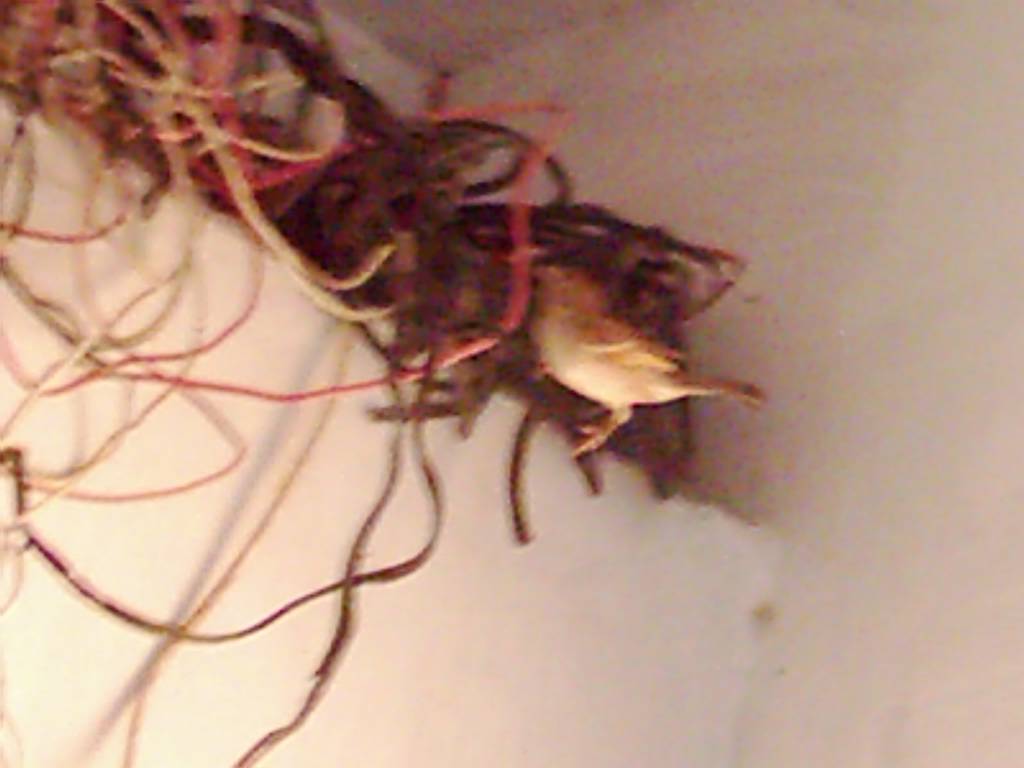
Intizaar,nice Pic of chiRya (a bird)..
me also plan to subscribe it...o yes, of course not a teen , but what if i still read Nonay-Haal tooo :-)
Intizaar,nice Pic of chiRya (a bird)..
Wednesday, November 24, 2004

Tuesday, November 23, 2004
Tabahii Masroofiyat...
Assalaam-O-Alaikum,
Hmmm......, Aray bhai logooon. Today was a very tough day for me. Aray at first I went to office and conducted lab after that I went to N.E.D, where I faced the bouncers from the teacher without having proper pading. Aray haaan yaaar, I had the exam over there. After three hours net practice I went back to office where I took three hours evening class.
Uff, when I went back to home I was feeling like I would never like to go back again, But I am sure in the morning my thoughts would be changed.
O' Allah give me power to face these days.
See you guys I am dozing off now.
Allah-Hafiz.
Sunday, November 21, 2004
Yahooo! Azadiiiiiiiiii
Assalaam-O-Alaikum,
Uff now I am free, it was very difficult to be alone in Ramadhan. Hmmm, and can't talk to people much as well. Yeah, I know what you people are thinking. Aray chandaa, I wasn't in Minna but in Aitakaaf. Abb I am back and very much busy as well. So, I will bug you people but after longer duration.
There is a series of Thakay howay Shair started at our group, so, You people will have to read it and bear it.
RD:
Shaid mujhe Nikal k kuch KHA rahay hain ap
Mehfil mai is khyal se phir aa gaya hon mai .........................
AayDee:
shaid pay yaqeen kerna hota hay kab sahee
jo kha rahay hain wo khila tau nahee rahay
RD:
khanay k liye sab hain yahan is deyar mai
khain ap khilanay walay hi tou nahi...........
jab se hua hai band shadioon ka khana
ta'aluq ap ka b dil jalanay walon se tou nahi .......
UBR:
mushaayaro.n me.n police vaalo.n kii 'duty' lagatii hai
aur vo ghar jaate jaate Khud shaayar ban jaate hai.n. Is
mauzuu par ek sher:
raftaa raftaa har police vaale ko shaayar kar diyaa
mahafil-e-sher-o-suKhan me.n bhej kar sarakaar ne
ek qaidii subah ko phaa.Nsii lagaa kar mar gayaa
raat bhar Gazale.n sunaa_ii.n us ko thaanedaar ne
Intizaar:
Shadi ki baat kar keh chaid diyaa hay mujh koo
Dil kou pateela samajh keh ragaid diya hay iss kou
Khanay main kiyaa rakha hay Woh tou hay hii khilanaan
Dataa Darbaar jaa naan tou mairay liyaay bhii lay anaan
Pakanay main hoo haath Hamaraa tou Paraishaan naan HO jaa naan
Jab tak wooH atii nahien part time bhi tou hay laga naan
Yaqeen nahien hay Tum koo tou Imm bhai seh Poochoo
Hubby keh Chubby honay main Haath kiss kaa hay bata naan
Shadi Shadii SHadiii, Sun Sun Keh HOo gaa aiy hain Adiii
Hoti kiya yeh balaa hay? Zaraa Sooch keH bataa naan
RD:
aray............
in hakoomati baton mai mujhe na tum ghaseeto
hal hai is ka jo ho hukam bus us pa ankhiaan meeto...
ab to shadi k khanay mai milta nahi sookha naan
bhol b jao ab mehndii mai milnay walay pakwaan
chup raho b'aee Police waloon ko koi bta na dai yeh ja k
ain gai DARBAAR ka sun k wahan b jain gai FINE laga k
khanay mai gar par gaya ghalti se b hath tumhara
hum to sooch k ghabrai hain k kia ho ga haal hamara
ghar wali lai aao to tab hum ko b bat'lana
hum b daira jama hi lain gai ,subah shaam wahin khain gai khana
Imm bhai ke to bat hi choro keun bhabi se pitwao gai
khud ko ghar ko bhago gai ,bhai ko kaisay bachao gai?
jo sun k shadi ka tum ho gaye ho adii....
yeh to zara btaoo k kab karo gai ab tum shadi
hum to kehtay hain bhai k tum jab ban jao BAKRA...
utha utha k thak jao tum BEWI ka har NAKHRA
tab yeh kehna k shadi kia hoti hai sarkaar.......
hamara to bus hai aik hi nara shadi hai bekaar..........;)
Intizaar:
Well, although I have paper tommorow (bhai logoon dua karnaan) I felt like continuing the Shaid series. Tou it starts like this:
Sahdi keh Khanoon peh howa hay jou BAN
Waja hay uss kee Kuch bhai logoon Kaa Nisbul-Ain
Hakumat aur police seh dartay hain bauhat Aap
Tax khanain kaa Aap nain bhi Tou nahien kiyaa paap
Khanain koo jou naan mila tou lagta hay, hoga bura haal tumhara
Hamaray Khanay Seh Ghabranain ki koi baat nahien Detol soap hay naan hamara
Ghar wali lai aa ain gay tou aaap kou tou zaroor batain gay
Aaap hiii tou Walimain kaay Khanain kaa bandobast karwain gay
Imm bhai kii jou hogi pitai tou hoon naan aaap paraishaan
Aaadii jab aap bhii hoon gay tou khaa ain gay dou aur naan
Aadii tou hain sun sun keh jou aap nain kiya sawal
Kab, Kahaan aur Kiss seh hogi? Allah hii janain haaal
Biwi kaa hoo nakhra, yaa hum banain bakraa
Tum naaan samjhoo gay yaroo, yeh maamla hay wakhra
Abb bolnaa naan yeh keh tumhain hum samjhaa dain
Chaloo line main peechay lagoo Kiyaa itnii jaldi bata dain.
Achaa, Its time to go now.
Allah-Hafiz.
Wednesday, November 10, 2004
Azaan!
Azaan ! Don't you think it is more attractive than any thing else..yes,a call from our Creator,our Lord a Lord of Alameen.Allahu Akbar.
Allahu Akbar, Allahu Akbar
Allah is the greatest, Allah is the greatest
Allahu Akbar, Allahu Akbar
Allah is the greatest, Allah is the greatest
Ashadu an La illaha illAllah
I witness/declare that there is no illah (god) but Allah
Ashadu an La illaha illAllah
I witness that there is no illah but Allah
Ashadu anna Muhammad ar Rasool Allah
I witness that Muhammad is Rasul (Messenger) of Allah
Ashadu anna Muhammad ar Rasool Allah
I witness that Muhammad is Rasul of Allah
Hayya 'alas Salat
Come towards the Salat
Hayya 'alas Salat
Come towards the Salat
Hayya 'alal Falah
Come towards the Success
Hayya 'alal Falah
Come towards the Success
Allahu Akbar, Allahu Akbar
Allah is the greatest, Allah is the greatest
La illaha illaAllah
There is no illah but Allah
Allahu Akbar, Allahu Akbar
Allah is the greatest, Allah is the greatest
Allahu Akbar, Allahu Akbar
Allah is the greatest, Allah is the greatest
Ashadu an La illaha illAllah
I witness/declare that there is no illah (god) but Allah
Ashadu an La illaha illAllah
I witness that there is no illah but Allah
Ashadu anna Muhammad ar Rasool Allah
I witness that Muhammad is Rasul (Messenger) of Allah
Ashadu anna Muhammad ar Rasool Allah
I witness that Muhammad is Rasul of Allah
Hayya 'alas Salat
Come towards the Salat
Hayya 'alas Salat
Come towards the Salat
Hayya 'alal Falah
Come towards the Success
Hayya 'alal Falah
Come towards the Success
Allahu Akbar, Allahu Akbar
Allah is the greatest, Allah is the greatest
La illaha illaAllah
There is no illah but Allah
Monday, November 08, 2004
No Haya, No Life
its 7:07 pm PST,25th Ramadan...here is one more artlice from Albalagh.
By Khalid Baig
Imam Shu'bah ibn Hajjaj was riding his horse when Abdullah intercepted him. Abdullah was a known street urchin. Not only he was given to a life of sin, he was also unabashed about it. Imam Shu'bah knew that trouble was ahead when Abdullah stopped him.
Shu'bah (d. 100 A.H) is known as the "Amirul Momineen fil hadith." He is one of the foremost scholars of the science of Hadith Criticism. Abdullah knew his stature as a great hadith scholar, but he was bent on having some fun. "Shu'bah! Tell me a hadith," he said with mischief in his eyes. "This is not the way to learn hadith," Imam Shu'bah replied. "You are going to tell me a hadith or else…" Abdullah threatened. When Shu'bah realized that he could not talk his way out of this he said: "OK, I'll tell you a hadith." He then narrated the isnad (a chain of narrators) and then the hadith: "Prophet Sall-Allahu alayhi wa sallam said: "If you have lost haya then do whatever you feel like."
Abdullah's demeanor changed suddenly. It was as if the Prophet, Sall-Allahu alayhi wa sallam, had himself caught him in his mischief and was speaking to him: "Abdullah, if you have lost haya then do whatever you feel like." He was totally shaken. "I just wanted to cause trouble for you," he admitted, "but please extend your hand. I want to repent."
This hadith turned a life around. Abdullah, the street urchin, became a student and then a great scholar of hadith. Today he is known as Abdullah ibn Maslamah Qan'awi. His name can be found repeatedly in Sihah Sitta or the six most authentic collections of hadith, especially in the collection of Imam Abu Dawud who was his disciple.
What is haya? It is normally translated as modesty or inhibition but neither word conveys the same idea as haya. Modesty suggests shunning indecent behavior but it also implies bashfulness based on timidity. That is why the adjective based on its opposite, immodest, is sometimes also used as a compliment suggesting courage. Inhibition is defined as: "Conscious or unconscious mechanism whereby unacceptable impulses are suppressed." This is a very neutral definition with no reference to right or wrong. So one finds psychiatrist "helping" their patients overcome inhibitions.
In contrast to the moral ambiguity of these words, haya refers to an extremely desirable quality that protects us from all evil. It is a natural feeling that brings us pain at the very idea of committing a wrong.
Along with its unique connotation comes the unique value of haya in Islam. Prophet Muhammad, Sall-Allahu alayhi wa sallam, said: "Every religion has a distinct call. For Islam it is haya." [Ibn Majah]. Another famous hadith says: "There are more than 70 branches of Iman (Faith). The foremost is the declaration that there is no god except Allah and the least of it is removing harmful things from the path. And haya is a branch of Iman." [Bukhari, Muslim]. As some Muhaditheen point out, the number 70 is a figure of speech. What the hadith tells us is that the declaration of faith is the most important part of Iman but that is not all. Iman also has to reflect itself in all kinds of actions in real life. Moreover, haya is a centerpiece of most of the actions that Iman calls for. It is the basic building block of Islamic morality. When it is lost everything is lost.
Based on such teachings, Islam brought about a moral revolution of unprecedented dimensions with haya as its cornerstone. The pre-Islamic Jahilya society of Arabia knew the word but did not understand its meaning. Nudity, the antithesis of haya, was not only common in every day life, it was even part of the most important religious ritual of tawaf (circumbulation of Ka'bah). So were all the other evils that flow from it. Islam exterminated all of those evils and changed the society in such a way that haya became one of its most cherished values. To this day in Friday Khutbahs around the world, the third Khalifah Hazrat Usman Radi Allahu unhu is mentioned as the person with perfect haya and perfect Iman (Kamil lil-haya wal Iman). Is there any other religion that celebrates haya like that?
Islam's laws about hijab, its ban against free mixing of men and women, its teachings about gender-relations --- all of these reflect a deep concern for haya.
For men and women who have not lost their haya, these come naturally. There is a moving story from the earlier Islamic period about a woman who learnt that her young son had been lost in a battle. She ran in a panic to confirm the news, but before that she took time to make sure that she covered herself fully in accordance with the newly revealed laws of hijab. She was asked how did she manage to do that in a time of great personal tragedy. She replied: "I have lost my son, but I did not lose my haya."
And for centuries afterwards Muslim societies did not lose their haya.When Muslim lands came under the western colonial rule about three centuries ago, they were faced with a civilization that was no different than the pre-Islamic Jahilya on the issue of haya. While it did not have better morality, it did have better guns. At the gunpoint of military and political domination, Muslim societies were made to loose their grip on haya on the collective scale. The powerful and attractive media became an important instrument in this war. First it was books, magazines and newspapers. Then radio. Now it is television. Together they projected ideas and images detrimental to haya. They made indecency attractive. The pace was increased tremendously by television, which has shown more firepower than all the previous media combined.
When historians write about the moral decline in Muslim societies in the twentieth century, they will probably underscore television in subverting the moral fabric of society. We can get a sense of the rapidity of our fall by realizing that what was unthinkable just a decade ago has become routinely accepted today. In some cases, we seem to have lost all control. Isn't it shocking that while contraceptive ads cannot be shown on TV in the U.S. or U.K for moral reasons, they are freely shown in the Islamic Republic of Pakistan?
We can get out of the morass by making haya as our number one concern in both individual as well as public lives. There is no Islamic life without Islamic morality. There is no Islamic morality without haya.
Wednesday, October 27, 2004
Learn to call on Allah
Asslamo Aleykum ....an untitled poem by an Anon ...but its awful
Learn to call on Allah,
In the dark,
While Riding on a bus,
Or sitting in a park
Learn to do it when,
Alone in a room,
Or staying up late,
Staring at the moon
And if someone boasts about,
What he did for Allah,
And asks you to tell him,
What you did for Allah
Just Say, "Why should I tell you"
If I did it for Allah?"
Sunday, October 24, 2004
Main Apnay Saray Gunahoon Peh Yoon Sharmindaa Hooon
Main Apnay Saray Gunahoon Peh Yoon Sharmindaa Hooon
Jou Udd Naan Paaa Aiy Fizaa Main Main Wooh Parindaa Hooon
Ilahi Taqat Day Parwaz Kar Ataa Mujh Koo
Abhii Hayat Hay Baqi Abhi Main Zindaa Hoon
Yeh Manaa Sab Hii Gandoon Main Sab Seh Gandaa Hooon
Magar Yeh Sach Keh Nabo Jehal Saa Darindaa Hoon
Rasool-e-Pak Peh Iman Dil Seh Layaa Hooon
GunahGaar Hooon Laikin Khudaa Kaa Bundaa
The Value of Words
a very good article; with so many thanx to Albalagh.
By Khalid Baig
"Whoever believes in Allah and the Last Day should say something good or keep quiet." [Bukhari]
Famous companion, Sayyidna Muaz ibn Jabal, Radi-Allahu anhu, once asked the Prophet Sall-Allahu alayhi wa sallam, "Tell me about an act that will cause me to enter Paradise and be protected from the Fire." "You have indeed asked something profound," responded the Prophet, Sall-Allahu alayhi wa sallam, "But it will be easy on whom Allah makes it easy. Worship Allah and do not associate any partners with Him. Establish regular Salat, pay Zakat, fast during Ramadan, and perform Hajj." Then he asked "Shall I not tell you about the doors of good: fast is a shield (against sins and against Hell-fire), charity extinguishes sins like water extinguishes fire; and the midnight Salat (the voluntary Tahajjud Salat)." Then he recited this verse: "Their limbs do forsake their beds of sleep, while they call on their Lord, in Fear and Hope: and they spend (in charity) out of the sustenance which We have bestowed on them." [As-Sajda 32:16]
Then he continued: "Shall I tell you about the beginning, the mainstay and the high point of this? The beginning is (acceptance of) Islam; It's mainstay is Salat; it's highest point is Jihad."
Then the Prophet, Sall-Allahu alayhi wa sallam, asked: "Shall I tell you about the thing on which all this depends?" He, then held his tongue and said "Guard this." Sayyidna Muaz ibn Jabal, Radi-Allahu anhu, asked: "Shall we be questioned about our utterances?" On this the Prophet, Sall-Allahu alayhi wa sallam, said, "Most people will be thrown into Hell---face down---because of the transgressions of their tongues."
The ability to speak and express themselves separates human beings from animals. The proper use of this great gift---or its absence---separates the good and successful people from the bad and unsuccessful ones.
Sayyidna Mu'adh's question was about eternal success. In response, the hadith mentions both mandatory and voluntary good deeds that cover a person's entire life. But then we are reminded that the outcome of all these depends upon guarding our tongue. In other words carelessness with the tongue can poke holes in all of our good deeds.
Another hadith highlights the same issue in a different way: "Every morning all the limbs of a person plead with his tongue: 'Fear Allah for our sake, for our fate is tied to yours. If you follow the straight path so shall we. And if you go astray so shall we.'"
Yet another hadith reminds us about the far reaching consequences of the words we utter. "Sometimes a person says something good but he does not realize how far will his words go. Yet it earns him the pleasure of Allah till the day he will meet Him. On the other hand sometimes a person says something bad, although he does not realize how far his words will go. Yet it earns him the wrath of Allah till the day he will meet Him." [Tirmizi, Ibn Maja, Muwwata Imam Malik].
The pre-Islamic Arab society was a very vocal society. While reading and writing were not that common, people did pride themselves in their facility with words---both prose and poetry. A person commanded respect based on his command over words. Using power of words only, they could sink reputations, start wars, and impact life in a similar fashion as modern media has come to demonstrate on a much larger scale. Then, as now, it was raw power like the power of the beasts of the Jungle.
Islam tamed this beast. It reminded us that each and every word we utter is being recorded by the angels and one day we will have to stand accountable for all this record. It reminded that a person's greatness lies not in how powerful he is with words but in how careful is he with them. It reminded that it is better to keep silent than to say something bad. And it is better to say something good than to keep quiet.
The social revolution it engendered was unprecedented. It produced a people who truly understood the value of words and who were as pious with them as they had been powerful. Their silence was the silence of quiet reflection. And they spoke only when they could improve the silence. Is it any wonder that even their extempore statements were pearls of wisdom.
Today, everywhere there are schools that can teach one how to read, write, and speak a language. But their students would never learn how to civilize this raw power; to use it only in promoting truth and spreading virtue; to never use it for promoting falsehood or spreading evil.
There is a lot of unlearning we have to do if we want to get out of this. It is a costly mistake for a believer to think that talk is cheap; that you can say whatever is expedient without any concern for any consequences beyond the immediate ones.
Such attitudes, prevalent today, lead to all kinds of sins: vain pursuits, gossip, dishonesty, insincerity, arrogance, belittling others, backbiting, spreading scandals and corruption, telling lies. Each of these has been clearly defined as a deadly sin by the Qur'an and Hadith. The treatment for each of these sins begins with learning the Islamically responsible use of the tongue. Then there are secondary problems caused in turn by these. In fact most of the problems in the family, in the society, and even between countries are either created or augmented by the irresponsible use of the tongue.
Modern communication technologies have made it possible for messages to be transmitted instantaneously all over the globe. But as the world marvels at these achievements, it continues to confuse the speed of a message with its quality and value. We pride ourselves on the ability to spread trash around the world at the speed of light. Witness the rubbish that continues to dominate the Internet alone. We are amazed by the sophisticated techniques of telling lies in a convincing manner. Witness the modern mainstream media machine and its hold on our thoughts and actions.
The "information age" is begging for the moral guidance of Islam.
Thursday, October 21, 2004
Message of Ramadan
Asslamo Aleykum ppl...Aay Dee here...yes in Ramadan its very hard to find time slot for blog...yep, its easy to put some good articles :-)..so here is one good article from Albalagh.
JazakAllah!
By Khalid Baig
We observe Ramadan every year. Do we also listen to it?
Ramadan is the most important month of our calendar. It is a tremendous gift from Allah in so many ways. In our current state of being down and out, it can uplift us, empower us, and turn around our situation individually and collectively. It is the spring season for the garden of Islam when dry grass can come back to life and flowers bloom. But these benefits are not promised for lifeless and thoughtless rituals alone. They will be ours if our actions are informed by the message of Ramadan.
Today the message of Ramadan tends to get drowned out by much louder voices of the pop culture that have an opposite message. We have become so accustomed to them that many of us remain enslaved to them even during Ramadan.
The most important message of Ramadan is that we are not just body. We are body and soul. And that what makes us human beings and that determines our value as human beings is the soul and not the body. During Ramadan we deprive the body to uplift the soul. This is all simple and familiar. But we can understand its significance if we remember that the message of the materialistic hedonistic global pop culture that has engulfed every Muslim land today --- just like the rest of the world--- is exactly the opposite. It says that body is everything. That the materialistic world is all that counts. That the greatest happiness -- if not virtue-- is in filling the appetites of the body. This message produces endless appetites and consequently endless wars to fill those endless appetites through endless exploitation. It produces endless frustrations since the gap between desires and achievements can never be filled. It produces endless chaos and endless oppression. Yet this trash comes in such beautiful and enticing packages that we can hardly resist it. We equate this slavery with freedom. We consider this march to disaster as progress. And with every movement, we get further and deeper into the mire.
The message of the materialistic hedonistic global pop culture that has engulfed every Muslim land today is exactly the opposite of the message of Ramadan.
Ramadan is here to liberate us from all this. Here is a powerful message that it is soul over body. Take a break from the pop culture. Turn off the music and TV. Say goodbye to the endless and futile pursuit of happiness in sensory pleasures. Rediscover your inner self that has been buried deep under it. Reorient yourself. Devote your time to the reading of the Qur'an, to voluntary worship, to prayers and conversations with Allah. Reflect on the direction of your life and your priorities. Reflect on and strengthen your relationship with your Creator.
On the last day of one Sha'ban, Prophet MuhammadSall-Allahu alayhi wa sallam, gave a Khutbah about the upcoming month of Ramadan. It is a very important Khutbah that we should carefully read before every Ramadan to prepare ourselves mentally for the sacred month. It begins: "Oh people! A great month is coming to you. A blessed month. A month in which there is one night that is better than a thousand months. A month in which Allah has made it compulsory upon you to fast by day, and voluntary to pray by night. Whoever draws nearer to Allah by performing any of the voluntary good deeds in this month shall receive the same reward as is there for performing an obligatory deed at any other time. And whoever discharges an obligatory deed in this month shall receive the reward of performing seventy obligations at any other time. It is the month of Sabr (patience), and the reward for sabr is Heaven. It is the month of kindness and charity. It is a month in which a believer's sustenance is increased. Whoever gives food to a fasting person to break his fast, shall have his sins forgiven, and he will be saved from the Fire of Hell, and he shall have the same reward as the fasting person, without the latter's reward being diminished at all."
The hadith continues and contains many other very important messages. However let us take the time to highlight two of the statements contained above. First, that Ramadan is the month of sabr. The English translation is patience but that word has a very narrow meaning compared to sabr. Sabr means not only patience and perseverance in the face of difficulties, it also means being steadfast in avoiding sin in the face of temptations and being persistent in performing virtues when that is not easy. Overcoming hunger and thirst during fasting is part of it. But protecting our eyes, ears, minds, tongues, and hands, etc. from all sins is also part of it. So is being persistent in doing good deeds as much as possible despite external or internal obstacles. Ramadan requires sabr in its fullest sense and provides a training ground for that very important quality to be developed and nurtured. Here is a recipe for the complete overhaul of our life, not just a small adjustment in meal times.
The highest point of Ramadan is itikaf, an act of worship in which a person secludes himself in a masjid to devote his time entirely to worshipping and remembering Allah. Some in every Muslim community must take a break and go to the masjid for the entire last ten days of Ramadan. Others should imbibe the spirit and do whatever they can.
But we must differentiate between worldly pleasures and worldly responsibilities. We take a break from the former and not the latter. Syedna Abdullah ibn Abbas, Radi-Allahu unhu, was performing itikaf, when a person came and sat down silently. Sensing his distressed condition Ibn Abbas enquired about his situation, learnt that he needed help, and proceeded to leave the masjid to go out and help him. Now this action does nullify the itikaf, making a makeup obligatory. So the person, though grateful, was curious. Explaining his action, Ibn Abbas related a hadith that when a person makes efforts to help his brother, he earns the reward for performing itikaf for ten years.
This brings us to the second statement to consider: that Ramadan is the month of kindness and charity. With those in distress in the millions in the world today, the need for remembering this message of Ramadan cannot be overstated.
Unfortunately, today another scene seems to be dominant in some parts of the Muslim world. Here Ramadan is the month of celebrations, shopping, fancy iftars at posh restaurants, entertainment and gossip. People stay up at night but not for worship; they while away that time watching TV or wandering in the bazaar. Ramadan here is more a month of feasting than fasting.
No one can take away our Ramadan from us; we just give it away ourselves. And if we realize the utter blunder we have made, we can take it back.
Tuesday, October 19, 2004
Answer to a recent blog
Answer to a recent blog at
http://www0.bbc.co.uk/urdu/blogs/articles/1097519517.shtml?thanks=1
Assalaam-O-Alaikum,
Janab! You said the word Molvi and mentioned that it means someone who thinks, his lame knowledge is the last word to stand. Well, you used this word as Satan used a drop of honey to start a fight. What I have observed from your blog is that you are one of those who think of your self out of any restrictions. My friend, the way you have used word Molvi, It looked to me that one day you would use some prestigious personality of Islam in twisted brand of statements.Bhai Meray, It is good to tell the truth without any fear i.e. Amar Bil Maroo Wa Nahee Anil Munkar. But would have to take care that we should not blame somebody with what he is not. I have seen people saying to every person having beard, Assalaam-O-Alaikum, Molvi Sahab. Bhai, people now-a-days have become so repetitive in saying things that they don’t even think while they are saying. I agree with Zubair bhai, keh Molvi is the person who is Alim (Scholar). People don’t think what they are supporting and I see Fidaa bhai congratulating for using this word for short sightened people. While I was thinking to defend this thing against you I see Abbas sahib giving one more definition of word molvi. Aray bahi, you can’t tackle each and every person with same attitude only because you guys had some mishaps or didn’t have a good experience.
Religion related stuff is not like keh you say 2+2 = 4. It is much more complex, so, please avoid using such statements which you educated but seemingly illiterate person don’t know what it really means.
Subscribe to:
Posts (Atom)